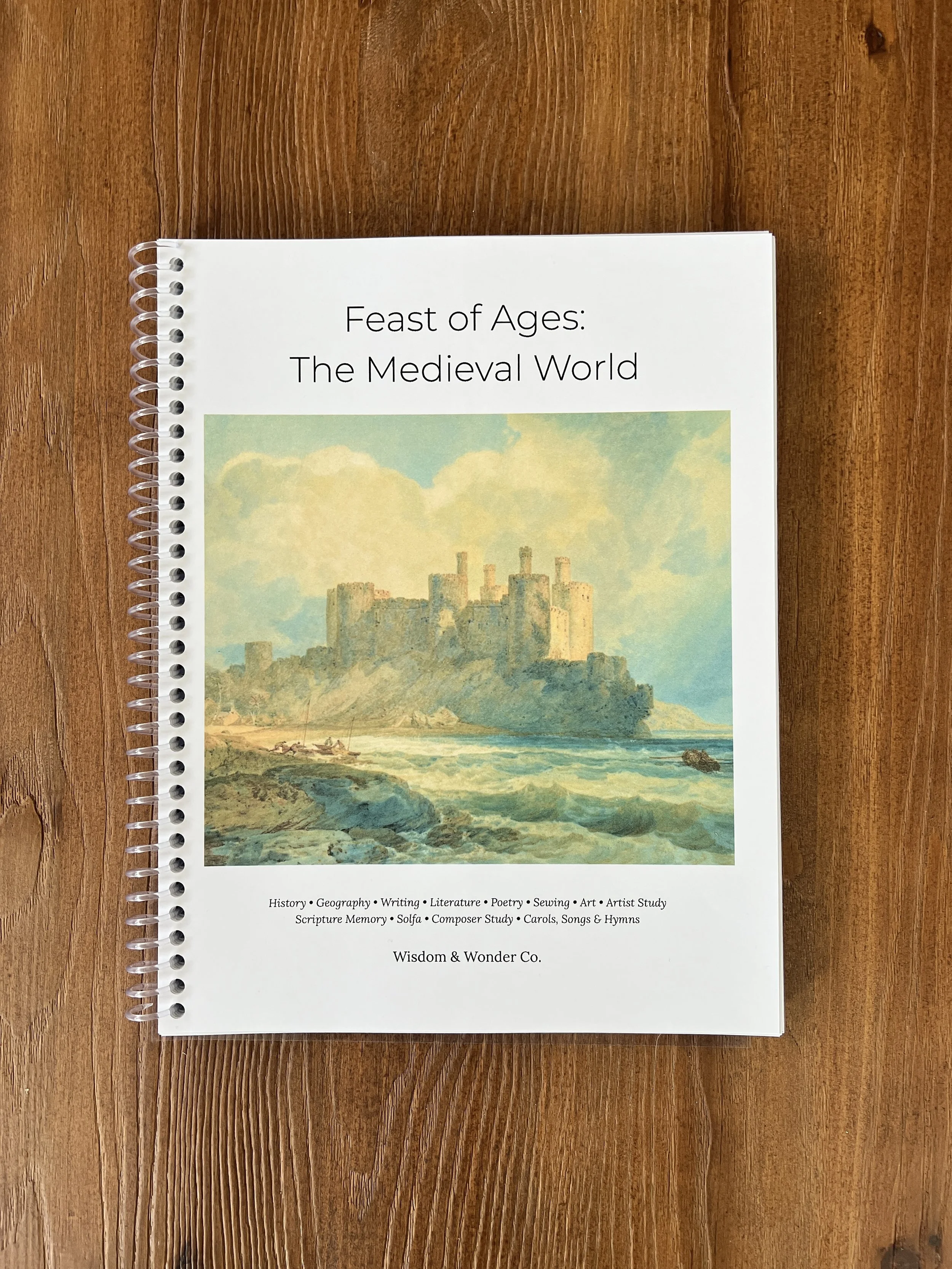
Feast of Ages:
The Medieval World
THE CHARLOTTE MASON FEAST, WOVEN INTO A DOABLE WEEK
GRADES 1 - 6 • FAMILY STYLE
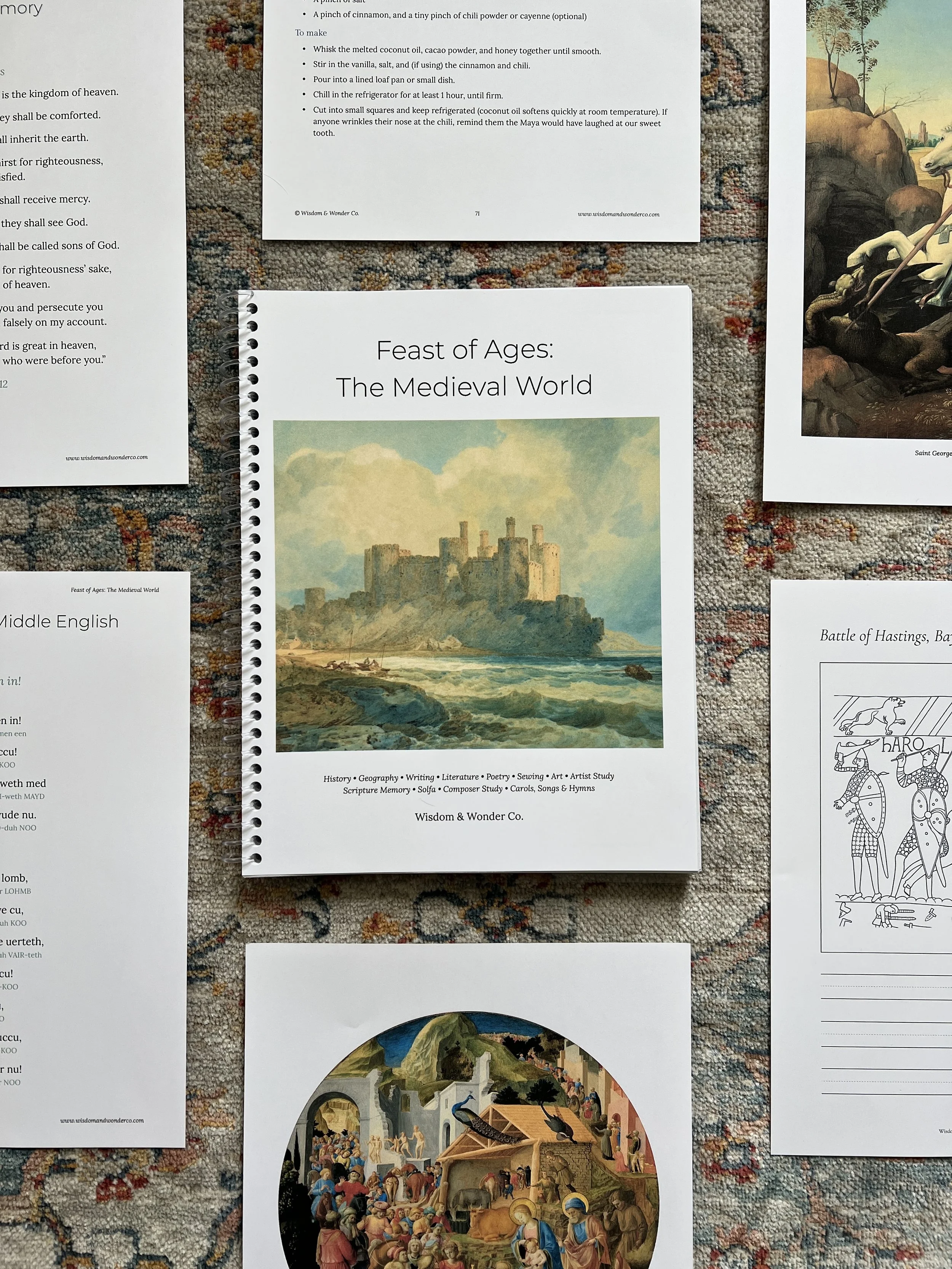
History • Geography • Writing • Literature • Poetry • Sewing • Art • Artist Study
Scripture Memory • Solfa • Composer Study • Carols, Folk Songs & Hymns
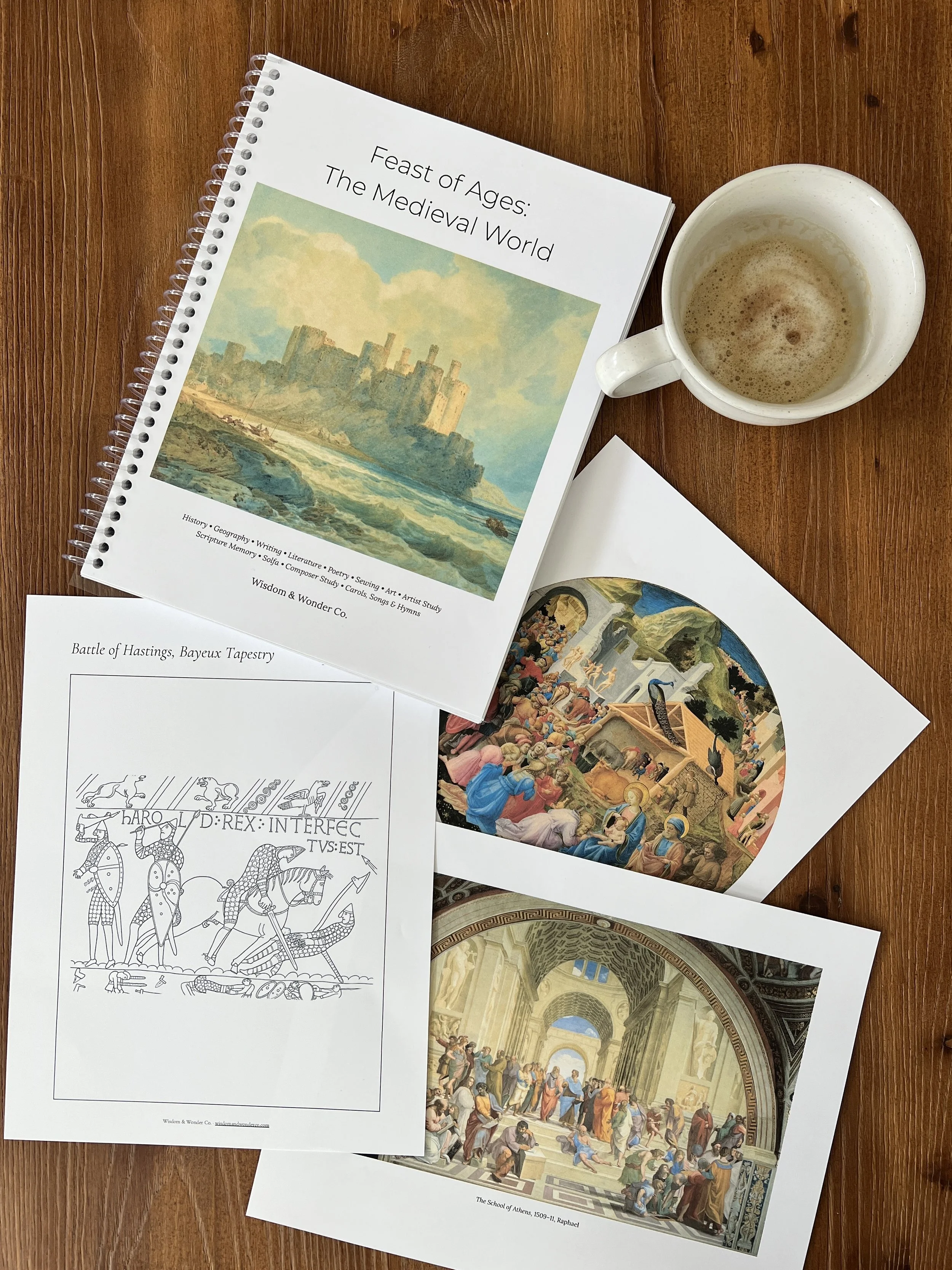
You didn’t choose this way of educating because it was easy.
You chose a classical, Charlotte Mason homeschool because you want to give you children truth and beauty, through living books, art, Scripture, and song.
It’s a feast. And while a feast can be something truly lovely, it isn’t so lovely when you’re feeling overwhelmed—like you’re drinking from a firehose.
Maybe you've tried the purist Charlotte Mason curricula out there, and the number of subjects and lessons each week felt overwhelming. Or maybe you've tried some of the more open-and-go, Charlotte Mason "inspired" curricula. They were more manageable, but they felt like disconnected pieces scattered through your week.
Here's what I've come to believe:
You shouldn't have to choose between the full feast and one that fits nicely into a week-by-week schedule. That's why I created Feast of Ages. I’ve planned out and scripted every single week so that the amount of work isn’t overwhelming. You won’t have to schedule every minute of your day. You’ll have plenty of time to go on a nature walk, play a board game, or simply get the things you need to get done other than homeschooling, well, done.
Every week weaves the “extra” enrichment subjects into the main academic subjects, it can be done family style, and it all centers around a single history cycle. This year’s release is The Medieval World and will take your family from the fall of Rome through the Reformation.
Finally, a doable feast.
↓
See a week come alive.
Week 14: The Battle of HastingsHistory, Geography & Writing
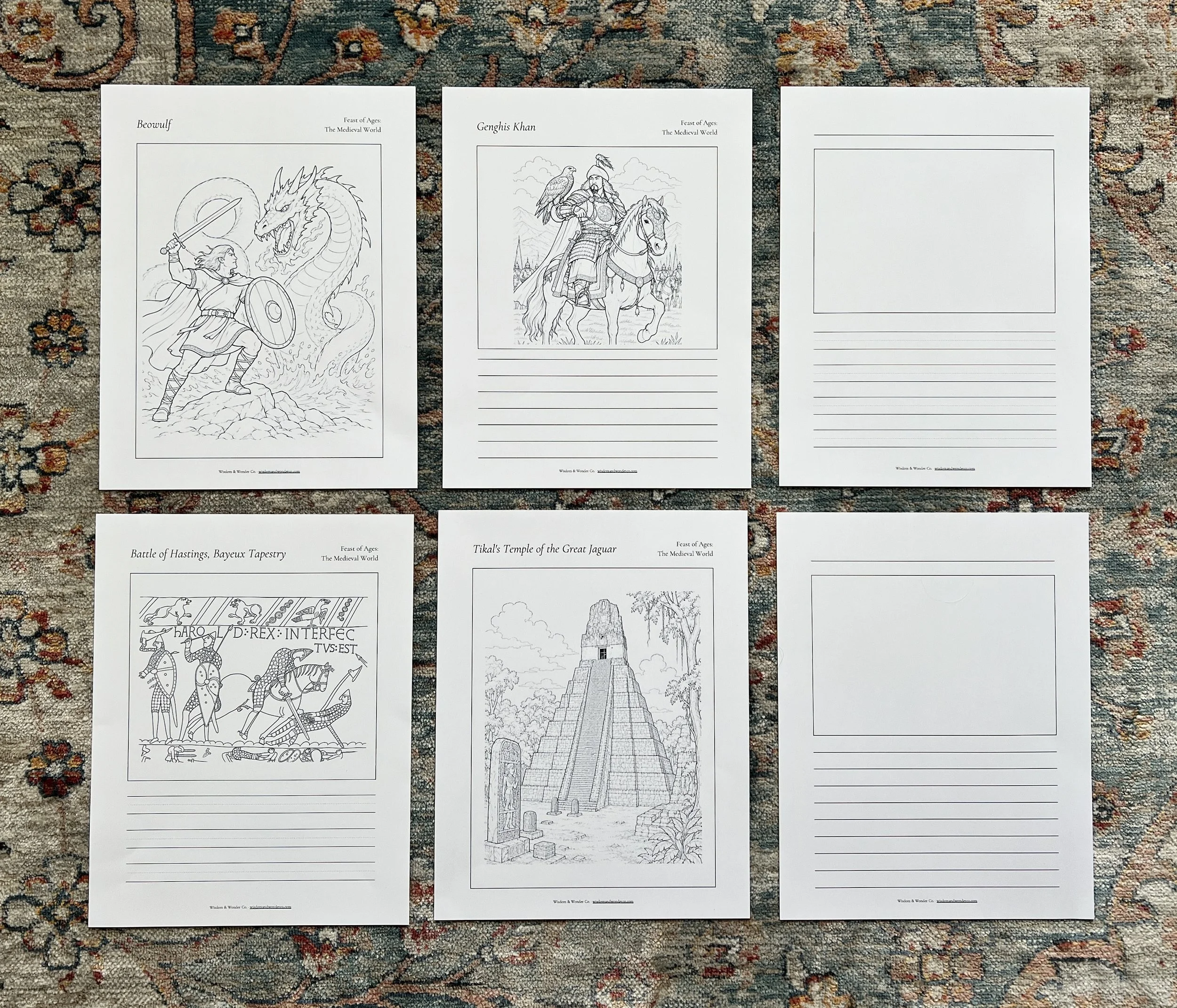
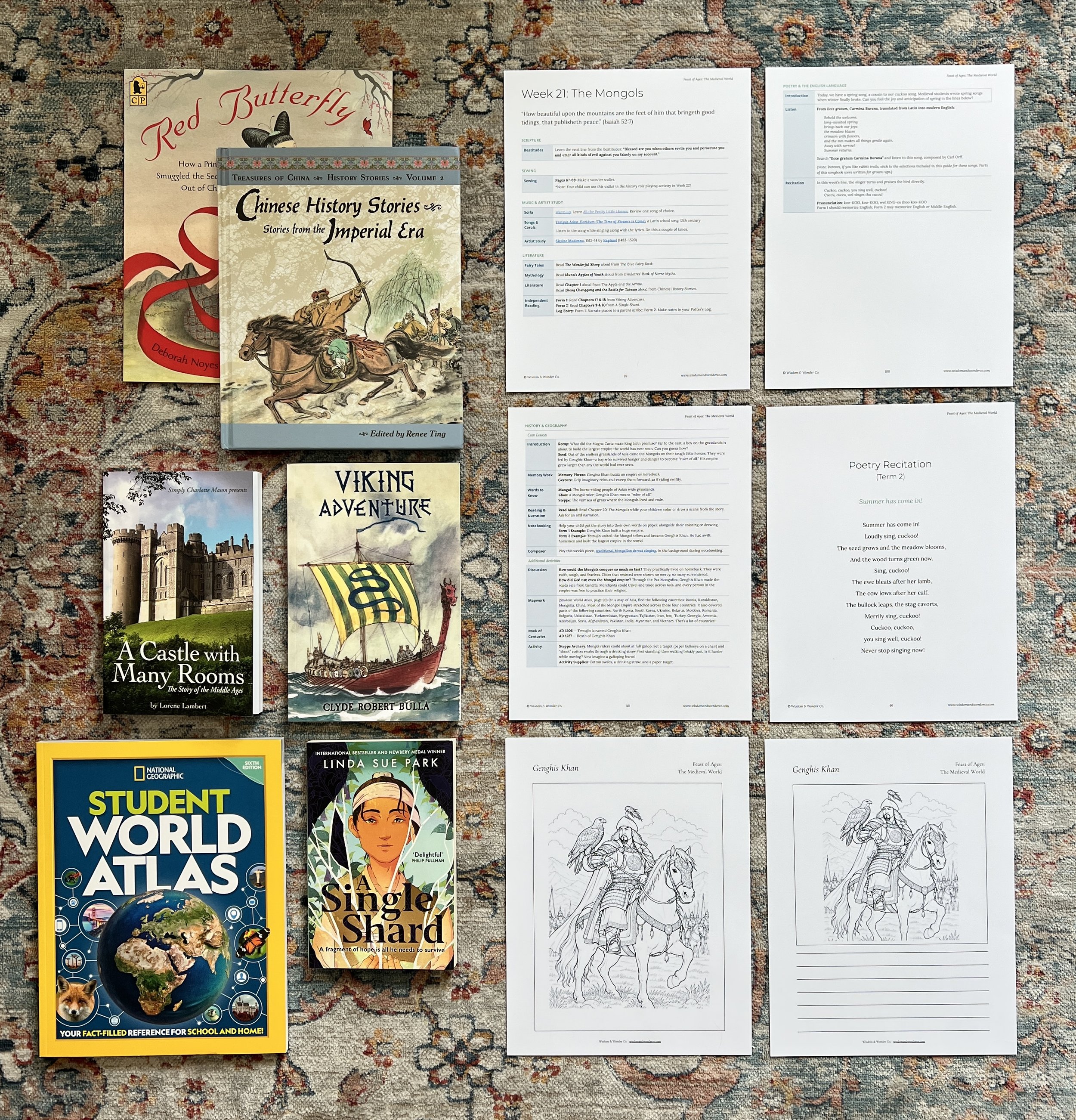
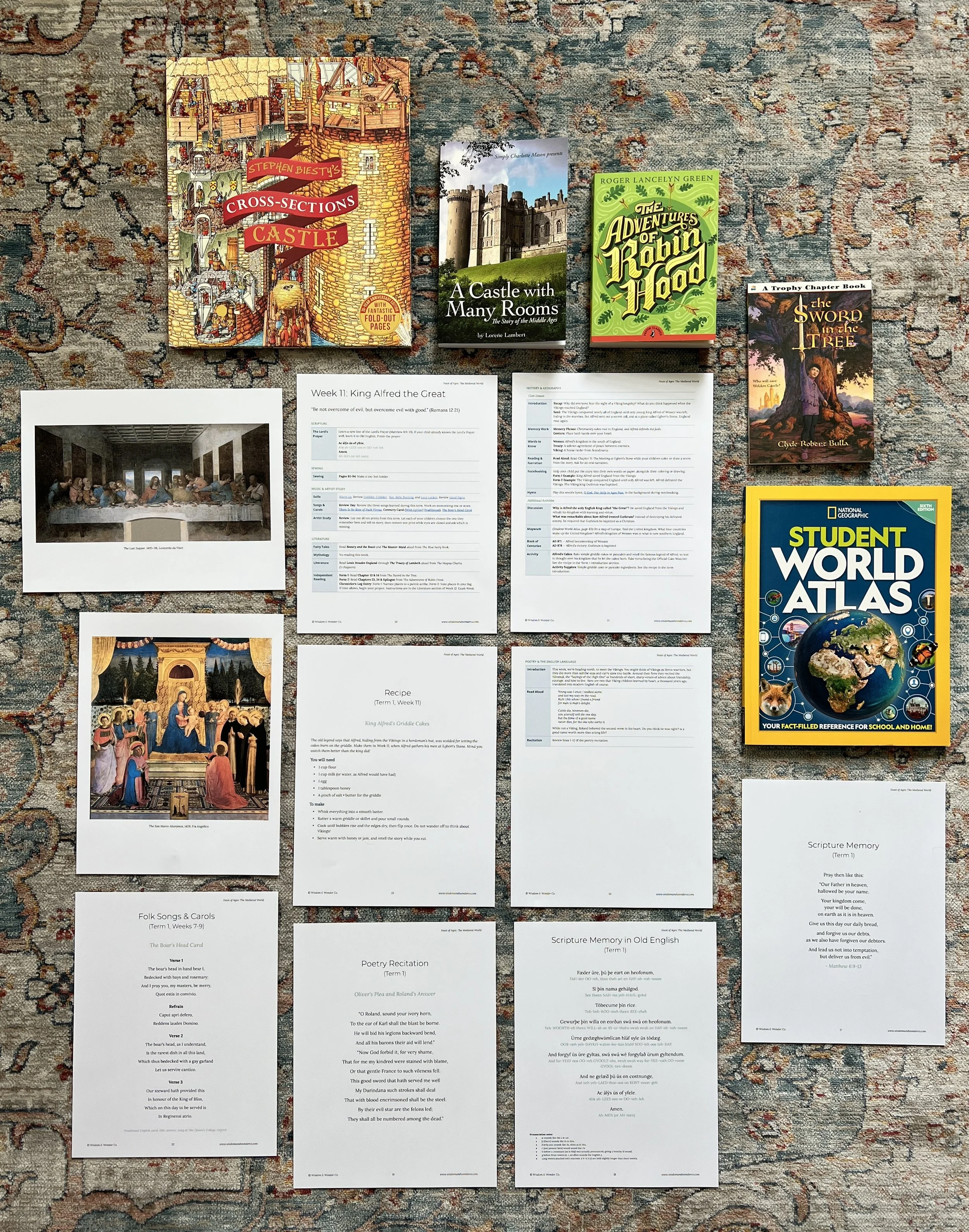
You recap the previous week’s history lesson with a recollection question and introduce this week’s lesson with the “seed”—all scripted for you. Then comes this week’s memory phrase: “The Normal Conquest: England falls under Norman rule.” Everyone steps forward firmly, claiming ground. You read the story of two men and one crown while your children draw or color a coloring page of the Bayeux Tapestry. Your children will summarize this week’s history story in their notebooks while listening to this week’s hymn, O Worship the King, in the background. You’ll look at a map of Europe to identify France, England, and the English Channel. The year 1066 goes into your family timeline or your child’s Book of Centuries as the Battle of Hastings. If your kids enjoy hands-on activities, this week’s history activity is to draw a comic strip like a tapestry-maker would have with ships, horses, arrows and all!
Poetry
This week’s poetry lesson opens on a battlefield. Hastings, 1066. Two armies stand facing each other. Taillefer, Duke William’s own minstrel, rides toward the English shield-wall singing the Song of Roland. (The epic poem from which your child memorized last term and learned about in your week covering Charlemagne.) The entire Norman arm take up song behind the minstrel. You children will never see poetry as a quiet subject again.
Song
This week’s video-based solfa lesson ends with the medieval folk song, Sumer is icumin in (Summer is coming in). You can play the song through the link provided as you and your children follow along on the lyrics sheet provided. They’re reading Middle English! Some words look like English, but others look like a foreign language. This week’s hymn was listened to during history notebooking. Each week alternates between a hymn and a composer piece.
Art
In art, your children look out the window and hold up their thumbs to discover a thumb can cover a whole tree. They’re learning about perspective: how an artist makes near things look near and far things look far. They’ll explore perspective in their own artwork. Then they’ll look at images of the Bayeux Tapestry: 230 feet of embroidered ships, horses, and more! The tapestry tells the story of the Norman conquest. How well did its tapestry-makers do on perspective? (Art and sewing alternate from one week to the next.) For artist study, you’ll look at The Holy Family by Michelangelo.
Literature
You’ll have several options for literature throughout your week: read Puss in Boots from the Blue Fairy Book and the story of Heimdall, the Watchman of Asgard from Norse mythology. You’ll continue alongside Marco Polo’s journey in your history chapter book read aloud. An optional picture book will take you to the discovery of silk in China. Your Form 1 student will continue in Viking Adventure (either as a read aloud or independent reading, depending on their reading ability). Your Form 2 student will continue in A Single Shard, a story about a boy in medieval Korea.
Scripture
As we see in our history lesson this week, no king is saved by having a big army, and no warrior is rescued by his own muscle. This week, we see Harold lose England (and his life) to William. And ultimately, William will face death one day too. God is the one who is sovereign above all.
“There is no king saved by the multitude of an host: a mighty man is not delivered by much strength.” (Psalm 33:16)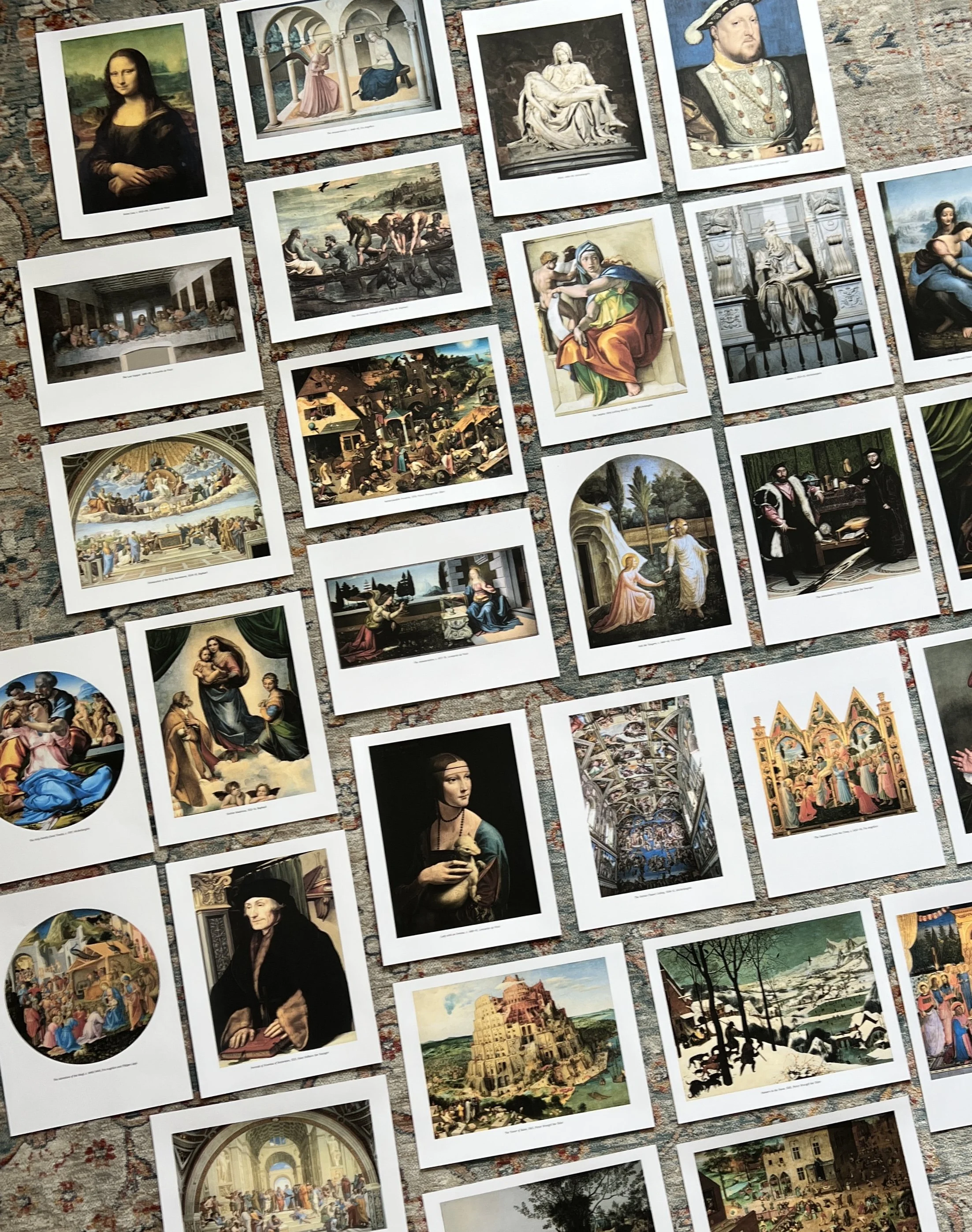
How it fits in your weekHow to Schedule It
Here’s how I schedule Feast of Ages in my own homeschool:
Once a week: History, geography & writing as a single, scheduled block
Once a week: Art (or sewing), poetry & song as a single, scheduled block
Two mornings per week over breakfast: fairy tales one morning, Norse myths the other
Two lunchtimes per week: History chapter book and picture book read alouds
One independent reading time per week: History chapter books for independent reading
That, plus math, science, grammar and spelling completes our homeschool.
WHY THIS WORKS
Where does the overwhelm come from?
For my own neurodivergent children, the typical Charlotte Mason feast was a lot for them mentally. Transitions can be difficult for them. The short lessons were great for their attention spans, but when 10 minutes of artist study was followed with 10 minutes of transition time, it felt like we were drowning.
That's when I realized: the overwhelm was never because of the lessons. It was because of the seams between them.
Feast of Ages weaves the smaller Charlotte Mason enrichment subjects into the main subjects. The result? There are no unnecessary transitions. Is “history” longer with history-based geography, artist study, hymns, and composer study wrapped in? It is. But the variety within the longer lesson times holds short attention spans in the same way as Charlotte’s short lessons, without the whiplash of starting over every ten minutes.
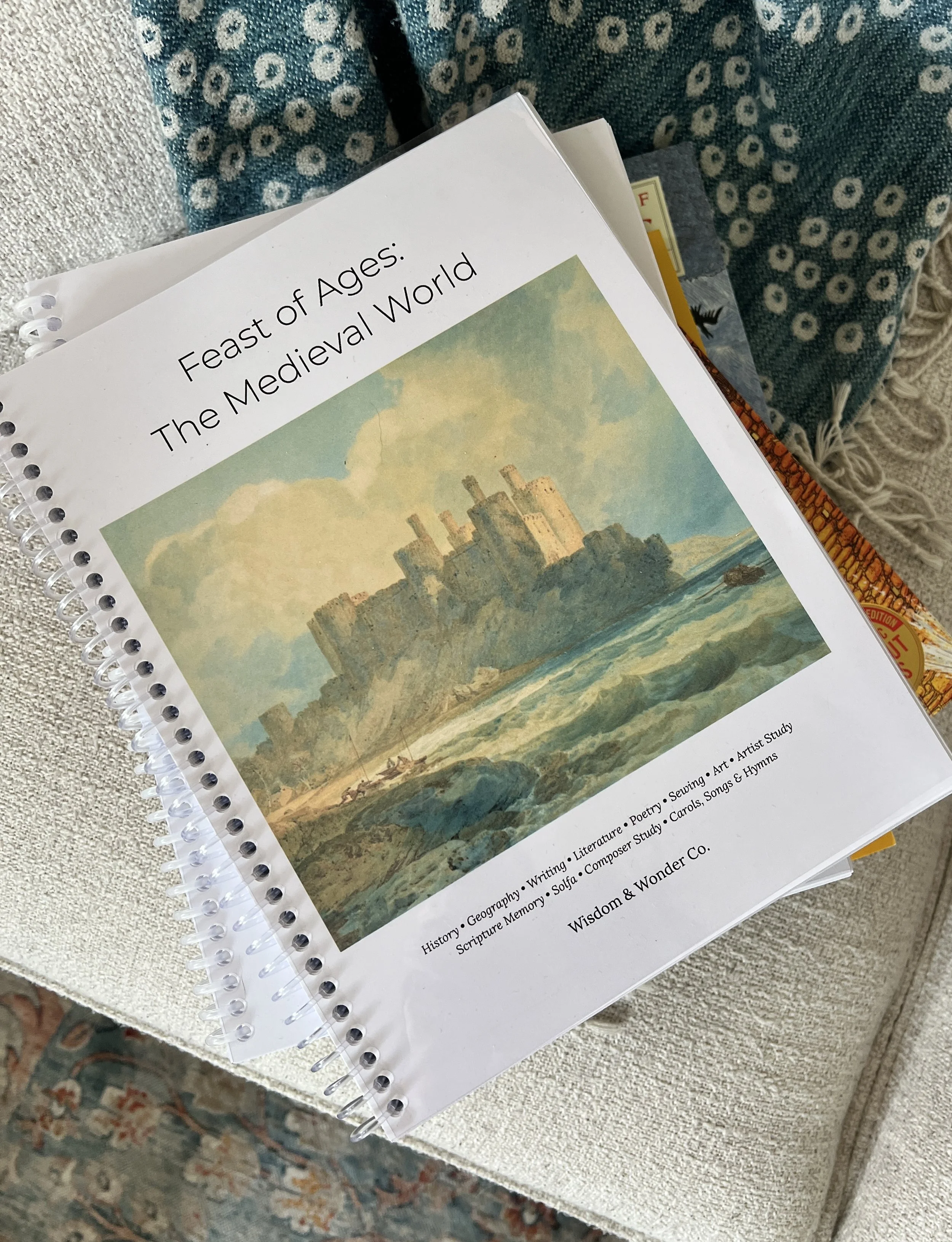
This guide is written for Forms 1 and 2. (That’s Grades 1 through 6 in the Charlotte Mason world. Most subjects are meant to be done together, as a family: literature read alouds, artist study and art lessons, music, poetry, geography, and of course, history. It all happens with everyone gathered around the same table or on the same couch (or two if you have a large family!).
Where different work should be given to different forms, assignments are clearly marked Form 1 or Form 2. There are separate narration and notebooking expectations, as well as independent reading selections (a single chapter book for each term). Everything else can be done entirely together.
FORMS 1 & 2 • GATHERED TOGETHER
One guide.
All your children.
Together.
WHAT SUBJECTS ARE INCLUDED?
Woven Together Through History
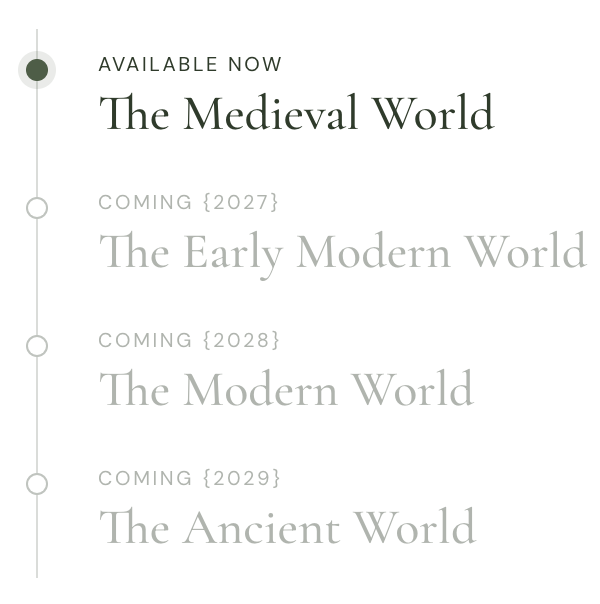
FEAST OF AGES SERIES
The first course
of a four-year feast.
First Edition
Founding Families Pricing
This is the First Edition of Feast of Ages: The Medieval World. The curriculum is complete: all 36 weeks, every subject, the entire feast. As a founding family, you’ll have the opportunity to provide feedback and help shape the next edition with refinements only real families around real tables can suggest. Buy at half price until September 30. You’ll also receive the updated edition for free.
Founding price through September 30.THE WHOLE TABLE
The Complete Feast
Everything described above: the full 36-week guide across all subjects. This is the version I teach from in my own home.
$48 $24
Full 36-week guide
Complete history & geography with mapwork
Literature, writing, poetry, art
All enrichment subjects
Printable notebooking and coloring pages
Printable artwork
THE MEDIEVAL SPINE
History & Geography
The heart of the year: 36-weeks of history and geography lessons for families who want a smaller feast.
$24 $12
36 weeks of history & geography lessons
Mapwork included
Printable notebooking pages
Printable coloring pages
The price will go up when the Second Edition releases this spring. Founding Families lock in now and get the new edition free.
FREQUENTLY ASKED QUESTIONS
Before you
set the table.
-
It is a complete and scripted curriculum for the following subjects: history, geography, literature, writing, poetry, art, artist study, solfa, hyms, folk songs, and composer study.
You’ll add math, science, and language arts skills (phonics, spelling, grammar) from your preferred programs.
It also contains Scripture memory work, but you’ll want to include Bible as well.
-
That’s exactly what it’s built for. Assignments are split by form where children genuinely need different work so that your family can complete most of the work together. Most families find this simplifies their day dramatically.
-
For my own family, history along with geography, notebooking (writing), a hymn or composer study, and artist study is. a single 40-minute block each week. Art or sewing, combined with poetry, solfa, and a medieval song or carol is a second 40-minute block each week. My kids each read their history chapter books during one of their independent reading times each week. The remaining read a louds I read aloud over several mealtimes throughout the week.
For our family, that is the perfect amount of time to spend for a full feast. That may be the case foor your family as well. Remember: This guide is exactly that—a guide. Use it as a tool in your homeschool. You can use this solely as a history and geography curriculum if that works best for your family. Or adding only a few of the enrichments. Please do what works best for your family.
-
No, deliberately. Lessons are grouped by subject each week, and you arrange them around your family’s rhythm. The guide tells you what can be skipped in a short year — and what to catch up on.
-
Yes. Scripture memory is woven through every week (ESV for memory work, with KJV weekly verses for the beauty of older English). You Form 2 children will have the option to learn the Lord’s Prayer in Old English. Hymns accompany the history lessons. Medieval carols are learned. A classic children’s catechism is included as an optional appendix.
-
A downloadable PDF, delivered instantly. Print the whole guide or just the pages you need; companion printables like notebooking pages and artwork for artist study are linked inside.
-
Because this is a digital product, no. That’s exactly what the free sample week is for. Download a full week and teach it before you buy.
-
The guide is licensed to a single family. For co-ops, enrichment programs, and schools, contact hello@wisdomandwonderco.com for licensing.
Set the table.
Your feast is ready.
Thirty-six weeks. One table. The fall of Rome to the Reformation, with the art, music, poetry, stories and more already woven together.